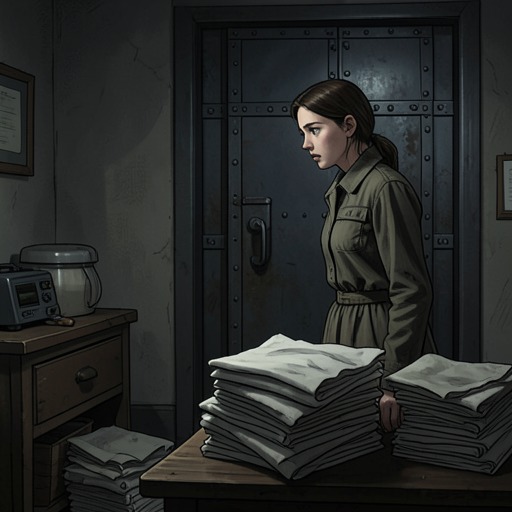
Antonio María Benavides’s will
The House of Bernarda AlbaAntonio María Benavides’s will is a consequential object in The House of Bernarda Alba: by leaving his stepdaughter Angustias substantially more money than his four natural daughters, it shapes her position in the household and helps make her marriage to Pepe el Romano possible. Its unequal distribution turns inheritance into both practical advantage and family grievance, while the circumstances invite questions the household leaves unresolved.
The Will and the Family’s Inheritance
After Antonio María Benavides’s death, the will becomes a matter for the household to address. A servant announces that Don Arturo has arrived to discuss it; Bernarda directs the servant to whitewash the courtyard walls and Poncia to put the deceased’s clothes in a large chest. The business of inheritance therefore unfolds alongside the ordinary work of restoring the house after a death.
The distribution gives Angustias, the only daughter from Bernarda’s first marriage, a substantial advantage over her four half-sisters. In the sisters’ discussion, Amelia identifies Angustias as the only rich daughter and connects her money to the interest Pepe el Romano has shown in marrying her. Magdalena contrasts Pepe’s youth and attractiveness with Angustias’s age and appearance, voicing the suspicion that the inheritance, rather than affection, explains his choice. The play presents this as the sisters’ interpretation, not as proof of Pepe’s motive.
Stepfamily Ties and Unequal Shares
The unequal bequest makes the distinction between step- and biological kin materially visible. Antonio María Benavides is Angustias’s stepfather, while Bernarda’s other four daughters are his natural daughters; nevertheless, Angustias receives far more than they do. Bernarda invokes the girls’ debt to their stepfather when Angustias challenges her treatment, underscoring that the family’s public language of obligation sits alongside a sharply unequal inheritance.
The commentary also raises, without resolving, a possible hidden dimension to the bequest. Antonio María Benavides had sexually taken advantage of the Servant, and the critic asks whether his greater financial favour to Angustias might reflect a closer relationship with her, and whether Bernarda suspects anything. These are explicitly questions, not established facts. Their presence places the will within the play’s wider pattern of concealed histories and enforced silence.
Marriage, Property, and Household Power
The inheritance changes Angustias’s prospects: the play’s account identifies her as the richest daughter, and Pepe’s engagement to her is bound up with that position. In a household where the unmarried daughters sew and prepare trousseaus, marriage is not merely a private attachment; it is shaped by money, family status, and the limited choices available to women. The will thus provides a material foundation for the sisters’ resentment and for their suspicion that Angustias’s wealth has influenced the match.
The object also belongs to a household economy organized by Bernarda’s authority. She controls the property and commands the servants, while the daughters’ differing shares affect their standing with one another. The will does not explain every motive behind the marriage, but it makes economic inequality impossible to ignore: Angustias’s advantage is inherited, her sisters recognize it, and the resulting tension remains part of the family’s larger struggle over status and opportunity.
Dramatic Significance
Rather than resolving family relationships, the will exposes how little the household can safely say about them. The disparity between Angustias and her half-sisters is clear; the reason for the disparity beyond the stated family relationships is not. That gap between a public legal arrangement and possible private history gives the will its dramatic force.
Its consequences are visible in the sisters’ talk about Pepe, in Bernarda’s insistence on obligations to the deceased, and in the family’s unequal prospects for marriage. In a play attentive to village gossip, inheritance disputes, and social rank, the will concentrates those pressures inside one household: money confers advantage, but it also breeds suspicion that authority cannot simply silence.